Buyer Guide
Embroidered vs Woven Patches: Texture, Text Limits & Cost Guide
Reviewed:
Compare raised embroidery texture with flat high-definition woven detail. Minimum lettering limits (2mm vs 4mm), price differences, wash durability, and factory MOQ from 100 pcs.


Short Answer
Choose custom embroidered patches when you want classic raised thread depth, traditional badge texture, and heavy-duty durability for uniforms and outerwear. Choose custom woven patches when your artwork contains fine typography (under 4mm), intricate micro-gradients, or requires a low-profile, smooth label finish that sits completely flat against fabric.
Engineering & Specification Comparison
| Comparison Factor | Custom Embroidered Patches | Custom Woven Patches | B2B Buyer Decision Rule |
|---|---|---|---|
| Surface Texture & Profile | Raised, 3D thread relief (1.5mm – 2.5mm profile) | Smooth, flat weave (0.8mm – 1.2mm low profile) | Embroidered delivers classic crest depth; woven delivers modern, scratch-free apparel finish. |
| Minimum Lettering Height | ≥ 4.0 mm (0.16 inches) | ≥ 2.0 mm (0.08 inches) | If typography contains fine disclaimers, serif fonts, or compact taglines, woven is mandatory. |
| Fine Detail & Gradients | Best for bold graphic motifs, shields, and crests | Superior for micro-lines, tight vectors, and color blending | Complex brand logos with intricate vector details reproduce far cleaner in woven thread. |
| Pricing & Cost Structure | Priced by stitch count and twill coverage (50%, 75%, 100%) | Priced by physical dimensions and loom warp density | Dense multi-color designs are often significantly more cost-effective in woven. |
| Border Edge Options | Classic Overlock Merrowed or Precision Laser Heat-Cut | Precision Laser Heat-Cut or Overlock Merrowed | Merrowed edges fit standard geometric badges; laser heat-cut fits custom die-cut contours. |
| Backing Attachments | Sew-on, Iron-on Heat Seal, Hook & Loop (Velcro), Adhesive | Sew-on, Iron-on Heat Seal, Hook & Loop (Velcro), Adhesive | 100% identical backing compatibility across both construction families. |
| MOQ & Lead Time | From 100 pcs · Samples 3–7 days · Bulk 7–15 days | From 100 pcs · Samples 3–7 days · Bulk 7–15 days | Direct Dongguan source factory production (ISO 9001:2015, SMETA, BSCI). |
Not Sure Which Construction Suits Your Design?
Send your vector file or sketch. Our Dongguan production engineers evaluate stitch density, needle penetration, and font clarity after artwork review at zero cost.
What to Send for Review
Send artwork, finished size, quantity, backing requirement and the intended use. If you are unsure which material fits better, include the smallest text size and the area where the patch will be attached.
Detail, Texture and the Traditional Patch Look
The main difference is surface. An embroidered patch carries raised thread coverage, which gives bold logos, badges and text a classic stitched depth. Because the design is digitized for the finished size, thread density and stitch direction are reviewed from the artwork before sampling, and the shape decides whether a merrowed border or a heat-cut edge suits the piece.
A woven patch is produced with fine yarns on a flat surface, which keeps small lettering and thin lines cleaner at a compact size. Woven patches suit buyers who want a lighter, label-like finish, such as clean logos on bags, caps or garments where raised texture is not required. Both constructions support the same range of attachment choices, including sew-on, iron-on, hook and loop, adhesive and pin backing, so the decision usually comes down to artwork style and the finished look rather than the attachment method.
Which Construction Fits Your Use Case
Start with where the patch will be used. Uniforms and workwear programs often use embroidered badges because the raised coverage reads well on caps, jackets and event wear and keeps its shape through repeated wear and laundry cycles. Clubs, schools and merchandise runs use the same logic when a traditional badge look is part of the brand.
Woven detail earns its place when the artwork contains a long word, a detailed logo or fine lines at a reduced size. Bags, luggage labels, cap fronts and lightweight garments are common placements, and woven construction is usually the cleaner option when the patch has to sit flat against the fabric. For apparel branding, check our custom logo patches guide.
If a single design must cover both looks, review the smallest text size and the surface of the product first. The custom patches team can recommend one construction for the whole program instead of mixing two looks that will not match. A third construction, PVC patches, covers molded bodies and color separation for outdoor-oriented use cases that neither thread construction handles.
Sample and Lead Time Considerations
Both constructions follow the same ordering windows: samples are typically produced in 3-7 days after the artwork and specifications are confirmed, and bulk production typically runs 7-15 days after order details are confirmed, with MOQ from 100 pcs per design. The practical difference is in the setup stage: embroidered artwork is digitized and woven artwork is separated for the finished size, so confirming the finished size with the artwork avoids a revision round later. See our patch cost factors, MOQ and lead time guide and the patch size guide when planning a program. The same construction families and the same sample window apply to custom keychains ordered alongside a patch program.
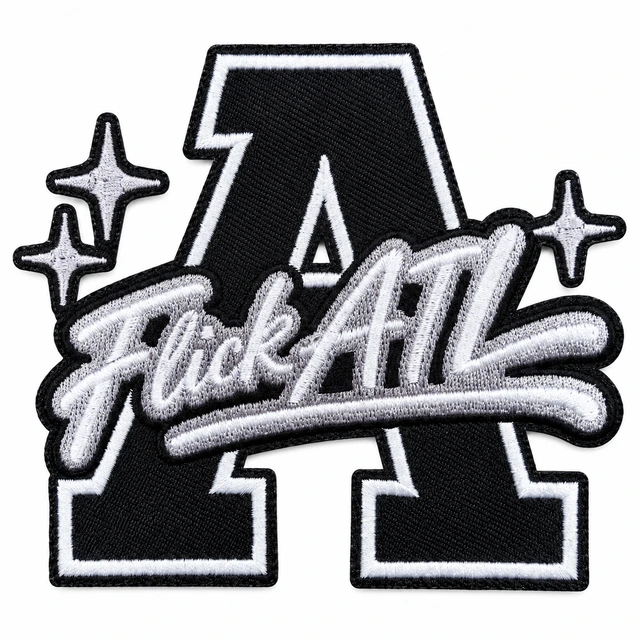
Completed Apparel Order
See an Embroidered Patch Project
An apparel brand order with 2,000 pcs per design and a 15-day project lead time. View the black-and-white and pink product photos and the confirmed order details.
View the apparel brand case study →Frequently Asked Questions
Is embroidery or woven better for small text?
Woven construction keeps fine lines and small lettering cleaner at a compact size down to 2.0 mm (0.08 in). Embroidered text needs at least 4.0 mm (0.16 in) height for needle penetration and stitch density, so if the design relies on very small letters, woven is usually the safer choice — confirm readability during free artwork review.
Do embroidered and woven patches cost differently?
Quotes are reviewed from the specific artwork because detail, colors, size, quantity and backing all affect the price. How much do custom patches cost explains the factors the factory reviews before quoting; for very dense, high-stitch designs, woven is often significantly more cost-effective.
Which backings work for both constructions?
Both embroidered and woven patches can be made with sew-on, iron-on, hook and loop, adhesive or pin backing. The right choice depends on the attachment surface and whether the patch will be permanent or removable — see the patch backing guide before quoting.
Can I order a sample before bulk production?
Yes. Samples are typically produced in 3-7 days after the artwork and specifications are confirmed. Approving a sample against the actual product surface first is the normal path, and bulk production then follows the approved artwork and order details.